At the Mental Health Foundation we have been working with people seeking sanctuary, and the specialist organisations that support them, for many years. As a UK-wide mental health charity we’re in a unique position to be able to do so across the nations, including here in Wales.
The experience of seeking sanctuary in another country, the contexts that cause people to flee, the journey to the UK, hostile public discourse, and the process of claiming asylum once here, all mean that people seeking sanctuary in Wales are particularly at risk of poor mental health.
Building upon our work from around the UK, the Mental Health Foundation developed the Bridges to Belonging project, which aims to increase access to quality mental health and wellbeing support for people seeking asylum and refugees living in Wales. We have incorporated learning from our earlier Perthyn project, along with learning from our work developing Community Conversations in Scotland, together with the knowledge and expertise of community partners, to co-produce a programme adapted to meet the needs of people seeking sanctuary in Wales.
The Mental Health Foundation works with community partners to deliver Bridges to Belonging. The project aims to build the knowledge and capacity of community organisations around mental health and to support them in delivering the programme locally. We’re always looking for new partners keen to develop support for people seeking sanctuary.
What I love [about Bridges to Belonging], is that everyone could give his or her own knowledge, and then those who were teaching us could build this up, based on what we have, so that we can improve and then try to know more about mental health… We also changed the setting of learning, like we went out into the park, chatting with the others. It was very interesting.
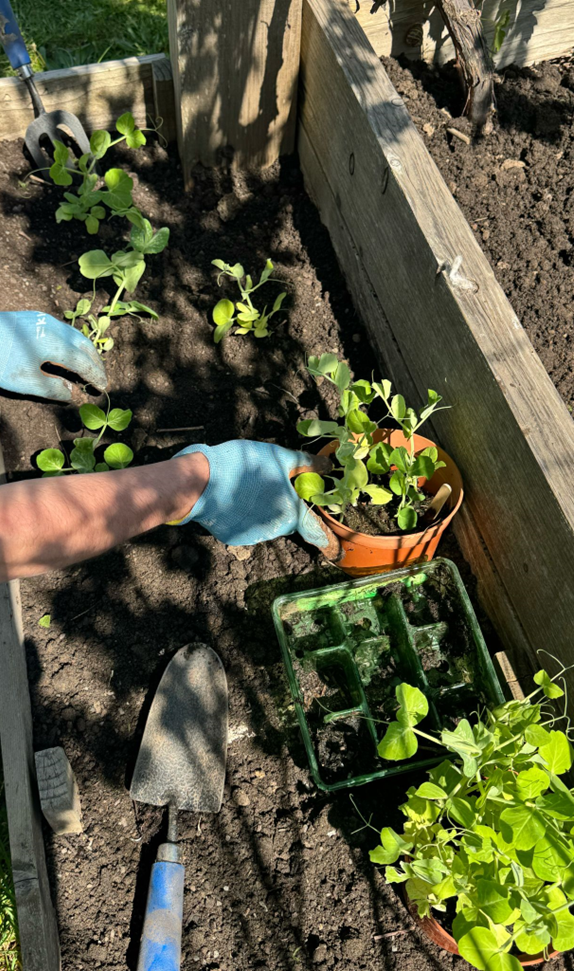
Bridges to Belonging takes place over 8-12 weeks, with groups discussing chosen topics such as trauma, anxiety, racism, and stigma, as well as the Foundation’s top tips for mental health. People are able to explore what this means for them, and those around them, the things they can do which support good mental health, and to build strong community and peer relationships. Alongside the sessions themselves, we train peer and community leaders to co-facilitate sessions, and support organisations to build capacity to deliver the community conversations model themselves.
Since January 2024, we’ve carried out this work with people seeking sanctuary and refugees, across Wales, bringing the community conversations model to organisations who can then carry it forward independently after the project’s conclusion.
So, what is the community conversations model?
Peer Support & Community Conversations
The community conversations model facilitates discussions between peers on mental health. Through peer support, a shared learning is created which is relevant to that particular community context. This helps improve mental health literacy, whilst simultaneously providing psychosocial interventions. There are various kinds of peer support, but they always include both giving and receiving support. This could be sharing knowledge or providing emotional support, social interaction or practical help. Everyone’s experiences are treated as equally important, and no one is more of an expert than anyone else.
Research shows that peer support can improve people’s well-being. Social relationships and having a sense of belonging are vital for good mental health. Peer support can prevent the need for other interventions, improve physical health, strengthen self-esteem, and increase confidence. The strength of a peer support model is that it can be adapted to suit the needs of anyone, and any organisation or community, no matter its size.
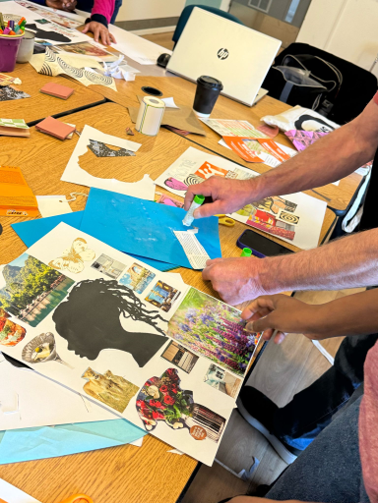
The community conversations model builds on the strength of peer support, increasing mental health literacy and incorporating the benefits of creativity for mental health. The ideas behind it are simple – increased knowledge on a mental health topic, combined with a creative activity, prompts people to have conversations on ways of supporting their own and others’ mental health. Through this, we can support people not only to understand their own mental health better, but also to support one another when times are tough. Community conversations is a model which can be continually adapted to meet specific needs.
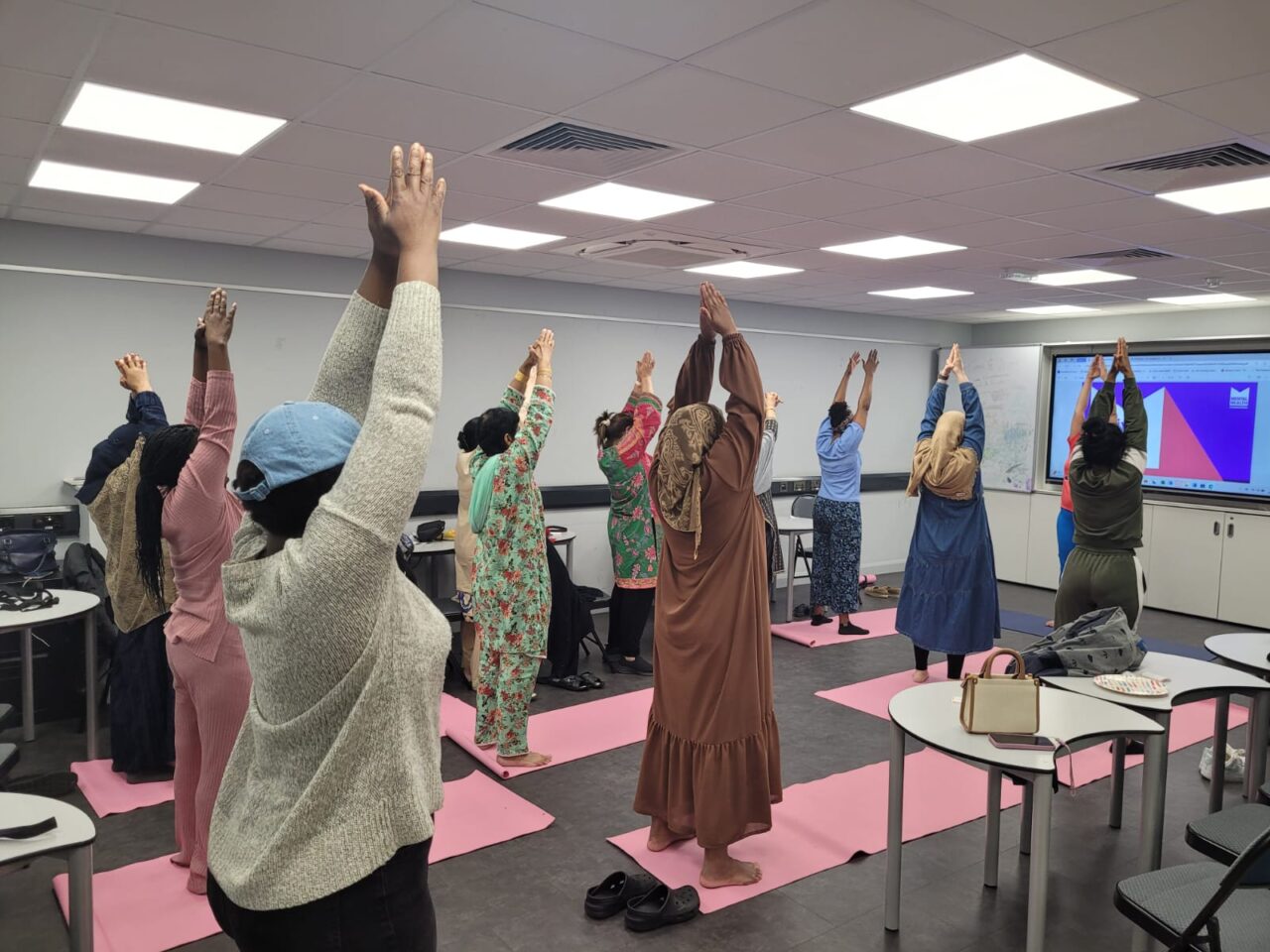
I like the fact that you’re able to share things… it’s confidential, and the fact that we’ve been able to explore. We’ve gone to the woods, currently planning another trip, the people, the positiveness and the yoga sessions, the smiles, the happy mood, like the volunteers and everyone being very supportive. It’s been really good for me.
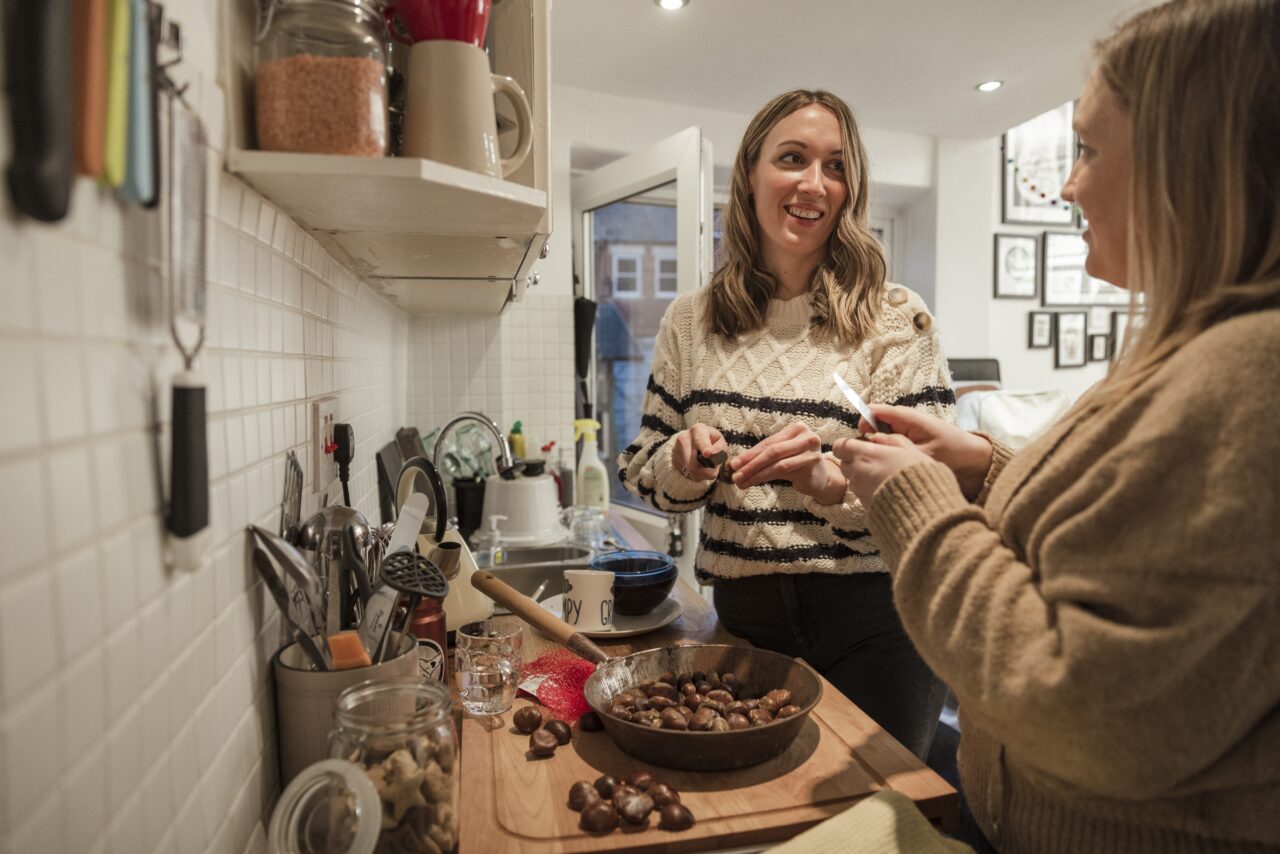
There are 4 elements to a Bridges to Belonging session. First, we start with an icebreaker, which helps break down any initial barriers and establishes a group connection which facilitates sharing. This is followed by a presentation which builds the groups’ knowledge on a mental health topic relevant to them. Alongside the presentation, we have facilitated conversations giving people the chance to open up in a safe environment, and share their thoughts and questions with the group. In the second half of the session, we do an activity tailored to the group’s interests and connected to mental health, such as cooking, or connecting with nature, through which the participants can bond and create space for mutual discussions.
Why Community Conversations?
Community conversations is a tried and tested model that we know is effective in supporting good mental health. The core model is based on combining evidence based interventions that are universally applicable: Mental Health Literacy, peer support, and engaging in creative or movement based activities. What makes community conversations different is that the session content is contextualised to the specific community it’s for. At the Mental Health Foundation, our content is developed and co-produced with people with lived experience of the community it’s intended to benefit. As a result, it’s relevant for participants and responds to their individual and collective experiences, and extremely adaptable.
We’re proud of how we have adapted the community conversations model alongside asylum seekers and refugees to work for them, and the support we can offer other organisations to use the model in their communities. We support groups to continually coproduce and adapt their sessions on an ongoing basis so that the content and activities have maximum benefit.
I found it really supportive to know that I’m not alone, that this is a safe space where everybody shares their experiences and how they feel, and knowing fully well that you’re not alone. And it’s just so helpful, really supportive, and it has really helped my mood, my mental health, and sometimes I feel like really better, just being here and then listening to everything, and these sessions and every other thing you have done has been so helpful.
For example, for a group of women where few of them drank alcohol, content on managing alcohol was replaced with content on boundaries and feeling comfortable saying no. Food activities will change to reflect cultural and dietary differences between groups. Outdoor and physical activities will be relevant and accessible for each individual group and place.
Ensuring that the sessions are relevant and accessible is fundamental. The content is adaptable into different languages. Where a common shared language isn’t present, we can adapt sessions to use the languages present in the room to ensure everyone can participate.
Bridges to Belonging is designed specifically to support good mental health among refugees and asylum seekers. The majority of asylum seekers do not have the right to work in the UK, nor to receive welfare or other state benefits, and therefore can experience financial barriers to participation. The project is able to meet the cost of transport for sessions, ensure access to childcare, and provide lunch, reducing barriers.
The Bridges to Belonging project works in partnership with local organisations who want to support better mental health for refugees and asylum seekers in Wales. We love working with new partners, and are always happy to share our expertise.
Reflecting on Bridges to Belonging
Over the last year we have supported over a hundred asylum seekers and refugees through community conversations and Bridges to Belonging has run the project with five amazing community partners. The projects’ success is down to its flexibility and accessibility, and the commitment to co-production with those with lived experience.
I learnt about mental health management. How you can first of all, support yourself and support others. For someone who has a family, it’s easy to know your family members, if someone is struggling with mental health issues, to know how we can reach out.
As we build and develop our programmes, our main aim is always to make them work well for the people at hand. Bridges to Belonging is doing just that – delivering much needed support to a group of people organisations often struggle to reach.
If you have more questions about Bridges to Belonging, or how you might be able to adapt the community conversations model to reach groups you work with, please check out the information on the Mental Health Foundation’s website, and feel free to get in touch with any further questions.
You might also like...
Arts, health and wellbeing for a happier, healthier Wales
Redefining wellbeing: Our journey from theory to systemic change